Guide / Home - Tracking
Litter tracking everywhere: fix it in layers, not with one product
Research updated November 10, 2026 / Clean Litter Lab notes
Tracking is the tax every litter box charges, and automatic boxes reduce it less than the brochures suggest - the cat still exits with litter in its paws. The owners who beat it do not find a magic mat. They stack four layers, each catching what the previous one missed, until what reaches the rest of the house is a weekly vacuum rather than a daily crunch.
The videos below include a dedicated tracking-reduction walkthrough from Tuft & Paw and a long-term owner's routine, because this is a problem where seeing the setups beats reading about them.
Disclosure: links on this page are Amazon affiliate links. If you buy through them, Clean Litter Lab earns a commission at no extra cost to you. Picks are never sold or sponsored. How that works.
The four layers, in the order to add them
Layer 1: at the exit. A fence, step or ramp forces a landing step, which is where most litter leaves the paw. Litter-Robot sells both as accessories for exactly this reason.
Layer 2: the mat. A honeycomb or deep-groove mat sized to the exit path, not a bath mat. It should cover the first metre of travel in every direction the cat actually walks.
Layer 3: the litter. Heavier, low-dust clumping litter tracks measurably less than lightweight formulas, which is one of the trade-offs in our litter guide.
Layer 4: the route. A hard floor route vacuums in seconds. Carpet between the box and the rest of the home is a tracking reservoir - move the box or add a runner you can shake out.
No single product fixes tracking. Owners who solve it stack at least the first two layers; the guide text explains the order to add them in.
Why single fixes disappoint
A mat alone catches what falls within its borders, and cats leap. A fence alone slows the exit but does nothing for the metre after it. Lightweight litter feels modern and tracks like it is trying to escape. Each layer addresses a different metre of the cat's route, which is why partial stacks plateau: the correct response to 'the mat helped a bit' is to add the layer before or after it, not to buy a bigger mat.
Watch: tracking setups that work in real homes
Machines with factory tracking answers

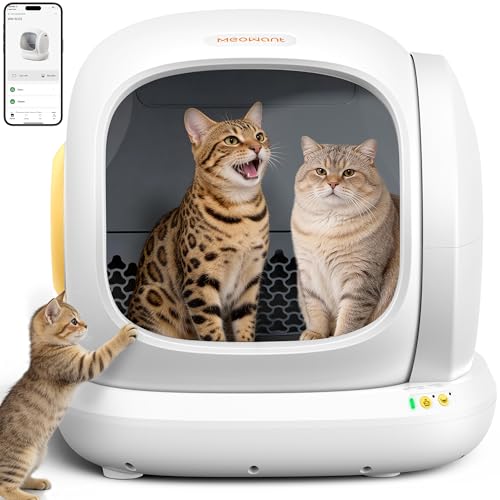
Quick wins checklist
- Fence or step fitted if your model offers one - it forces the landing step where paws shed litter
- Mat sized to the exit arc, minimum one metre in the cat's actual walking direction
- Mat shaken out weekly and washed monthly, or it becomes a litter source itself
- Litter switched toward a heavier, low-dust clumping formula if your model allows it
- Box placed so the exit route is hard floor for the first two metres
- A stick vacuum living within reach of the box - friction decides whether touch-ups happen
Questions owners actually ask
Do litter mats actually work?
Yes, as one layer. A honeycomb mat traps granules that fall through to the lower layer instead of scattering. Sized and placed to the exit arc, owners rate them the single most effective purchase - just not a complete system.
Is there a litter that does not track?
No, but weight matters: heavier clay formulas track less than lightweight ones, and large-grain litters that some systems cannot sift are not an option for most automatic boxes. The litter guide maps the trade-off per mechanism.
Why does my open-top box track more?
No hood means no baffle at the exit and enthusiastic diggers throw freely. The layers matter more, and a higher-sided mat placement at the dig side helps.
Should I put the box on carpet to catch litter?
No - most automatic boxes forbid carpet underneath because weight sensors misread. Catch litter on a mat on hard floor, not on the room's carpet.
How much tracking is normal?
A light scatter within a metre that a weekly vacuum handles. Granules in the bed or bathroom mean a layer is missing, usually the exit step or the route.
Does a covered box stop tracking?
It reduces the dig-side scatter, because the hood baffles thrown litter, but paw tracking - the granules carried out on feet - is unchanged. Covered owners still need the exit step and mat layers; the hood replaces neither.
Spotted something out of date? The lab corrects the record in the open - see the contact and corrections page.